Why Tokenized "Worldviews" Are the Next Mass Asset Class
Moving beyond the extractive economy of NFTs and Memecoins toward the "Assetization of Truth" and why ZEIT Finance is the necessary infrastructure for this shift. Crypto has a pattern. Every few

Moving beyond the extractive economy of NFTs and Memecoins toward the "Assetization of Truth" and why ZEIT Finance is the necessary infrastructure for this shift.
Crypto has a pattern.
Every few years, we get a “mass-distribution speculative asset” that spreads far beyond crypto-native circles. People who don’t care about AMMs, rollups, or MEV still end up buying it, posting it, and talking about it. It becomes culture. It becomes identity. It becomes a social object.
First it was ICOs. Then NFTs. Then memecoins.
And now, I think the next one is going to be **tokenized vault shares for prediction-market strategies **a.k.a. tokenized exposure to forecasting skill. Under the right conditions, these vault tokens can be as big as NFTs and memecoins combined… with one crucial difference:
For the first time, a mass-distributed speculative asset actually has intrinsic value that makes real sense.
Not “narrative value.” Not “attention value.” Not “maybe there’s a roadmap.” Actual value: a pro‑rata claim on a portfolio that can produce PnL from real markets resolving to real outcomes.
This is what we are building at **ZEIT.finance We are **building the missing wrapper that turns Prediction Markets into perpetual, composable, tradable assets.
1) JPEG Summer Wasn’t About Art. It Was About Distribution
Let’s be honest, because this is the part crypto always tries to rewrite after the cycle ends.

Most of the “on-chain JPEG” narrative was always hard to justify. Yes, there been exceptions like tickets, membership, provenance, gaming items, creator tools, IP experiments, but the dominant form of NFT mania was: Putting an image on-chain is… well, it’s an image on-chain. We tried hard to make it profound, but the truth is: it very rarely made sense to normal people.
And the market eventually agreed.
But here’s what people miss when they dismiss NFTs as “stupid”:
NFTs succeeded at distribution because anyone could create one.
-
A musician could attach it to a song.
-
A designer could attach it to a collection.
-
A random person could attach it to a lifestyle brand, a Discord, a “community,” an identity.
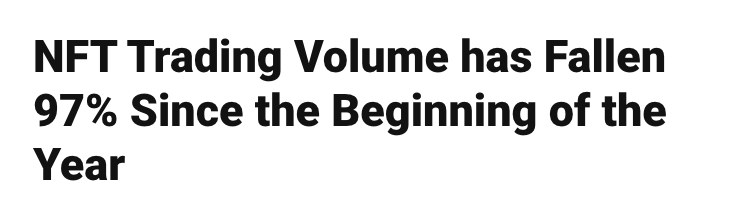
Even if most of it was nonsense, the mechanism was powerful: easy creation + social narrative + speculative upside = mass distribution.
NFTs were less “art tech” and more “a viral template for speculative ownership.”
That template is the important part, because the next big thing in crypto always inherits the distribution logic of the last one.
2) Memecoins did the same thing - just faster, simpler, and even more extractive
Memecoins took the NFT formula and removed the last remaining need for justification.

They didn’t pretend to have utility. They were pure asymmetric payoff and collective attention.
And they also had the same distribution superpower:
Anyone can make a memecoin.
Launchpads made it trivial. A narrative hook made it sticky. A face, a joke, an animal, a phrase, a moment so anything could become a token.
Memecoins are the purest expression of “attention markets.” They’re not about value creation; they’re about *capturing attention long enough to sell liquidity to the next buyer. *
**Only 15 Out of 1.7 Million Meme Coins Succeed **

And yes, this dynamic has damaged crypto long-term. It trained new entrants to expect they’d get max-extracted at warp speed. It burned trust. It reduced “new money” inflow. People learned that the average outcome is you become exit liquidity for someone else’s game.
So if we want the next big wave to be different, the next mass-distribution asset needs two things:
-
The same viral distribution mechanics (easy to create, easy to share, easy to understand).
-
A real reason to exist beyond attention extraction.
That’s where prediction markets & and tokenized vaults built on top of them are coming in.
3) Prediction markets have something NFTs and memecoins never had: universal comprehension + information value
Prediction markets are one of the few crypto applications that basically everyone understands in 10 seconds:
“You bet on what will happen.”
That’s it.
And once you say it, people instantly start generating examples:
-
elections
-
interest rates
-
celebrity drama
-
sports
-
macro events
-
tech launches
-
cultural moments
It’s dinner-table-native. It’s group-chat-native. It’s human-native.
You don’t need to explain zk-proofs. You don’t need to explain liquidity pools. You don’t need to explain tokenomics.
You can literally be at Thanksgiving dinner and someone says: “So what do you think happens next year?” and the natural follow-up becomes: “Can you bet on that?”
The deeper idea is: Prediction markets are machines that price information.
Prediction markets have mass appeal and a real function

That’s already a better foundation than “owning a JPEG.”
4) The missing piece: “I don’t want to bet... just let the expert bet for me”
Now comes the dinner table moment that matters most for adoption:
“Can I just give you the money and you make the bets for me?”
This is exactly what happens in every market category:
-
People don’t want to day trade stocks; they buy funds.
-
People don’t want to pick individual bonds; they buy bond funds.
-
People don’t want to run a sports betting model; they tail a handicapper.
So it’s inevitable that prediction markets evolve from:
- individual contracts (expire, resolve, done)
into
- managed exposure (continuous strategy, ongoing thesis)
Btw, this is where “copy trading” often gets mentioned -- but copy trading usually fails in practice, especially for anything non-trivial, because:
-
sizing matters
-
timing matters
-
risk management matters
-
drawdown tolerance differs
-
your copy is always late, partial, or distorted
-
and small mistakes compound into large differences
What people actually want is simpler:
One token that represents the strategy, so your outcome equals the manager’s outcome, pro‑rata.
Make it continuous. Make it tradable. Make it a single asset.
5) Tokenized vaults for prediction markets: the mechanism that can go mainstream
Here’s the core idea,:
-
A manager (human, team, or algorithm) runs a strategy across prediction markets.
-
Users deposit capital.
-
The strategy takes positions: buys, sells, holds, rebalances.
-
Users receive a token representing a share of the vault.
-
If the vault’s value goes up, the token’s value goes up.
This exists in crypto already in many forms (ERC‑4626 vaults, tokenized strategies, etc.). The difference is the underlying asset: prediction markets are uniquely legible to mainstream users, and they span every domain of real life.
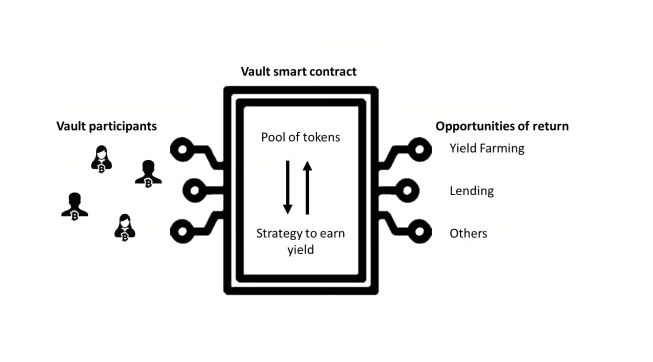
But making this work for prediction markets isn’t trivial. It’s not just “ERC‑4626, but add Polymarket.” Prediction markets are thin, expiry-based, and resolution-based. They don’t behave like spot tokens. You need a whole execution and accounting layer that respects liquidity and settlement realit
And that’s exactly why we are so bullish on ZEIT.
6) The Most Powerful Part: A Vault Token Isn’t a Poolshare - It’s a Thesis You Can Buy
Here is the mental model shift.
A vault token isn’t merely “a share of a pool.”
A vault is:
-
a thesis
-
a worldview
-
a set of beliefs about how reality will unfold
-
expressed through positions across markets
So the token becomes something much more powerful:
A tokenized worldview you can invest in.
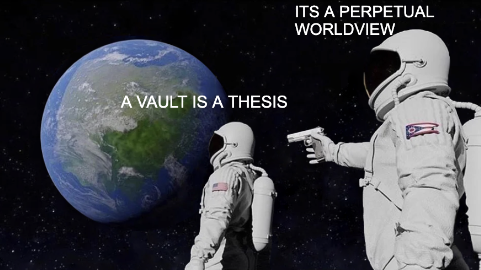
You’re not buying a JPEG. You’re not buying a joke coin. You’re buying exposure to a coherent belief system that gets continuously tested against reality.
And unlike a single prediction market where every contract resolves to 0 or 1 and then dies, a vault can be perpetual:
-
a market resolves → capital frees up
-
the manager rolls into new markets
-
the thesis continues
-
the track record becomes a continuous time series
That means the “show goes on” as long as there are events to trade.
This is where the metaphor becomes real: the vault token is a living asset backed by a living strategy.
7) Price as Reputation: The Credibility Score We’ve Never Had
Now take the idea one level deeper.
In today’s world, credibility is mostly theater:
-
follower count
-
engagement
-
editing
-
confidence
-
repetition
-
vibes
People build entire careers being “right” in a way that can’t be audited. If they’re wrong, they pivot. If they’re right once, they print that clip forever.
A prediction vault token turns credibility into something brutally precise:
**a time series. **
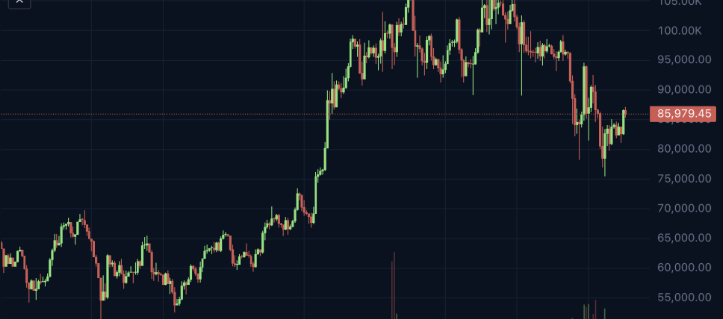
If you’re consistently right, the vault’s net asset value grows over time, and the share price reflects it.
If you’re consistently wrong, the share price bleeds.
You can’t fake it with charisma. You can’t “thread harder.” You can’t buy engagement.
Your reputation becomes financial, and your track record becomes public.
That is a new kind of social primitive.
Not "influencer" Not "thought leader"
**An investable forecaster. **
Creators Have Been Monetizing Attention the Same Way for a Decade
This is where tokenized prediction vaults stop being “a cool DeFi product” and start threatening entire business models.
Right now, most creators monetize like this:
-
Capture attention
-
Monetize attention (ads, sponsorships, courses, subscriptions)
-
In crypto: often tokenize attention and dump it
Even in the best case, the audience pays regardless of whether the creator’s “predictions” are correct.
Prediction vaults flip the direction of value flow
Instead of: “Give me money because you like my content.”
It becomes: “Join my worldview, and we both win if I’m right.”
Example A: the political / ideology vault
Imagine a conservative influencer runs a vault. Their thesis expresses itself through prediction markets:
-
“Policy X will happen.”
-
“Court ruling Y will land this way.”
-
“Candidate Z will win.”
-
“Regulatory outcome A won’t pass.”
Whether you agree with the politics or not is irrelevant to the mechanism.
If they’re consistently right, their vault token price rises. If they’re wrong, it falls.
That’s a credibility score that can’t be faked by engagement metrics.
It’s aligned:
-
✅The vault leader earns by being right over time
-
✅The followers earn by trusting skill
-
✅ Nobody gets “extracted” by default
-
✅ The relationship strengthens instead of decaying
This is the aligned creator primitive everyone pretends they want, but almost nobody has built correctly.
Because it forces the creator to do the one thing that matters:
put skin in the game.
8) Why this can be as big as NFTs and memecoins (the conditions)
I said “under certain conditions” for a reason. Here are the conditions that matter:
Condition 1: creation must be easy (like minting an NFT / launching a coin)
If it takes weeks of engineering and governance to launch a vault, it won’t be mass distribution.
People need to be able to ship:
-
a vault thesis
-
a vault strategy
-
and a share token with minimal friction.
Condition 2: the narrative must be human
NFTs were identity. Memecoins were story. Prediction vaults become: belief, credibility, reputation.
“You can buy my worldview” is an insanely viral concept, because it’s what people already do socially, just without a clean financial primitive.
Condition 3: the token must be tradable
If you can only enter/exit through slow fund mechanics, you lose the “crypto native” momentum.
Secondary market trading (even if imperfect) is what makes these things spread.
Condition 4: the asset must have intrinsic value people can feel
This is the biggest difference.
NFTs: value is mostly social consensus. Memecoins: value is mostly attention dynamics.
Prediction vault tokens: value is tied to a portfolio that can make or lose money based on resolution outcomes.
That doesn’t guarantee profit. It doesn’t remove risk.
**But it makes the asset **real.
And when you combine real value with viral distribution mechanics, you get something that can scale beyond crypto.
9) So where does ZEIT.finance fit?
ZEIT is building the unsexy infrastructure you need for this to scale.
The important part (and the part that makes me bullish) is the mechanics, because mechanics decide whether this category becomes real or just the next extractive meta.
ZEIT’s designed the structured product (the “Perpetual Prediction Vaults” model), here’s what we are building at the core:
ZEIT’s core primitive: Perpetual Prediction Vaults (PPVs)
A PPV is a vault share token (ERC‑20) that represents exposure to a portfolio of prediction-market positions, designed to remain active by rolling capital into new markets as old ones expire/resolve.
In other words: a perpetual wrapper around expiring prediction contracts.
Why that matters
Prediction markets aren’t naturally “perpetual.” Contracts end. Positions resolve. Without a wrapper, you’re stuck constantly re-entering new markets manually.
PPVs convert “a pile of expiring bets” into “a continuous asset you can hold.”
The part that separates real systems from toy systems: liquidity + pricing reality
Prediction markets often have thin orderbooks. If you naïvely mark the vault at mid-price, you can create fake NAV. Then withdrawals become a solvency crisis the moment someone wants out.
ZEIT’s approach explicitly focuses on:
-
mark-to-market NAV (so the vault has a continuous NAV)
-
but crucially impact-aware pricing, i.e., valuing positions in a way that accounts for orderbook depth and what an unwind would actually
-
manager comp via a performance fee with a high-water mark, paid in vault shares
[Impact aware pricing analyzes the order-book depth in real time ]
That means: the manager earns only when the vault makes new highs and they get paid in the same asset they’re responsible for, which keeps them exposed.
If prediction vaults are going to be a new asset class, they have to be built like one.
10) The bigger picture: prediction vault tokens as a new social/financial layer
Zoom out.
If this category works, it changes how expertise monetizes:
-
journalists
-
analysts
-
sports models
-
macro commentators
-
geopolitics experts
-
creators of any ideology or worldview
-
even AI agents with provable track records
Right now, credibility is mostly vibes + engagement + brand.
But a vault token creates a parallel internet layer where:
your credibility is priced.
Not by likes. By PnL.
And if that becomes common, it becomes a new form of social coordination:
-
“I don’t care what you say - show me your token chart.”
-
“Don’t sell me a course - open a vault.”
-
“If you’re confident, let people invest alongside you.”
That’s a cultural shift.
The Recipe for a Mass-Distribution Asset Class (And Why This One Finally Has Substance)
Here’s the pattern that repeats in every big crypto wave:
-
It’s simple enough to explain in one sentence
-
It’s easy enough to create that millions of people can participate
-
It’s social enough that it spreads outside crypto
-
It’s speculative enough to be fun
-
**It’s liquid enough to become a cultural object
**

NFTs checked almost all of these, but lacked substance and liquidity. Memecoins checked all of these, but were mostly pure extraction.
Tokenized prediction vaults can check all of these and have a real underlying anchor:
-
you’re holding a claim on collateral + positions
-
the strategy is continuously evaluated by outcomes
-
and success has a measurable, transferable representation
That’s why I think this category will explode.
Not as a niche DeFi toy.
As a mainstream, culture-level object.
This Time It’s Not a JPEG It’s a Claim on Reality
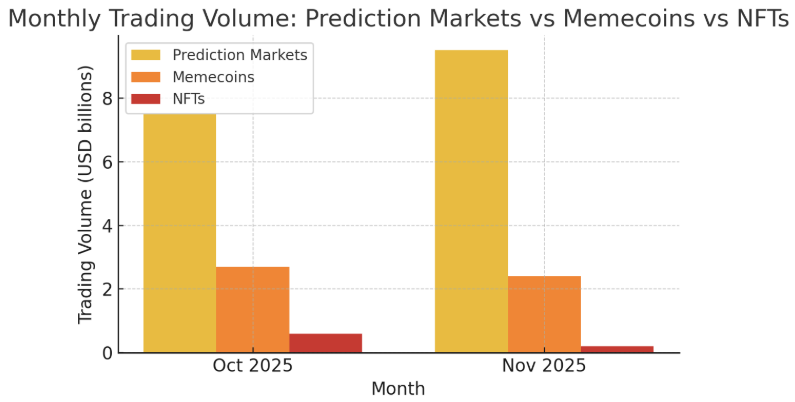
NFTs were a speculative object with a social wrapper. Memecoins were a speculative object with a meme wrapper.
Perpetual prediction vault tokens are a speculative object with a truth wrapper.
A tokenized worldview.
A credibility chart.
An investable thesis that doesn’t expire.
I’m going to write more on this, including:
-
why “perpetual” is the killer feature for prediction exposure
-
how vault tokens become the ultimate creator monetization primitive
-
and what happens when credibility becomes liquid
This is just the beginning.
*(Not financial advice. Prediction markets and managed vaults involve real risk, including loss of principal.)
written by @allquantor*